

 English
  ខ្មែរ
ខ្មែរ 


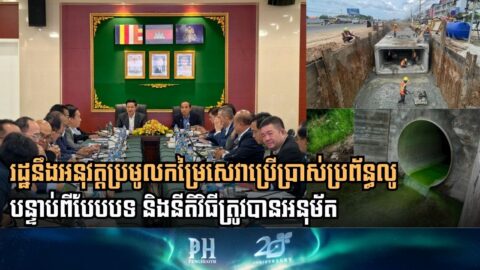
Authority to Launch Sewerage Service Fee Collection After Policy Review and Approval
In an important move to streamline the collection of sewerage service fees, the Council of Ministers convened a closed meeting on December 26, 2025, to discuss a draft sub-decree outlining the procedures for this process. Chaired by HE Liv Sovanna, Vice President and Chairman of the 4th Working Group of the Council of Lawmakers, and […]
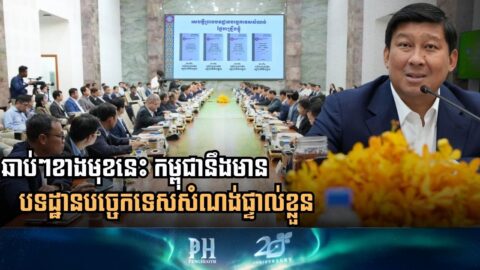
National Council for Building Technical Regulations Takes Significant Steps Towards Enhanced Standards in Cambodia
HE Say Samal leads the meeting to approve the draft technical regulations to ensure safety and sustainability in the construction sector The National Council for Building Technical Regulations convened a significant meeting under the auspices of the Ministry of Land Management, Urban Planning, and Construction, according to the meeting held on 18 December 2025. This […]

The Gov’t Announces New Public Bus Lines to Techo International Airport to Ease Traffic Congestion
In an effort to alleviate traffic congestion and improve travel convenience, the Phnom Penh City Bus Autonomous Administration (CBA) has announced plans to launch two new public bus lines to Techo International Airport starting September 9, 2025. This initiative aims to provide residents and visitors with an efficient transportation option to one of Southeast Asia’s […]
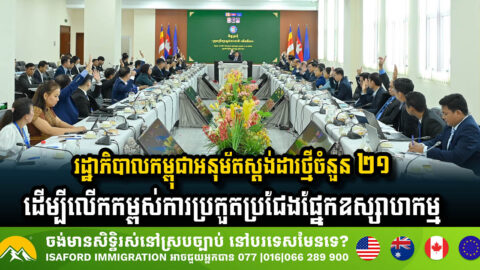
Cambodian Government Approves 21 New Standards to Enhance Industrial Competitiveness
In a significant move to bolster industrial growth, the Cambodian government has approved 21 new international standards aimed at enhancing the country’s competitiveness. This decision was announced during the 31st meeting of the National Standards Council, led by H.E. Hem Vandy, Minister of Industry, Science, Technology, and Innovation, on September 3, 2025. The newly approved […]
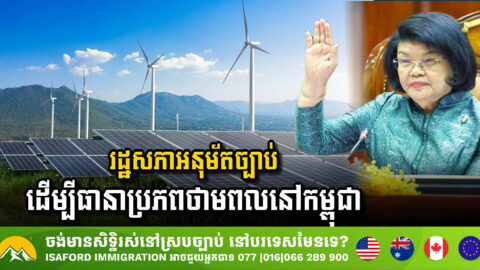
Cambodian Parliament Approves Landmark Law for 24 Electricity Investment Projects
In a significant move to bolster the nation’s energy infrastructure, the Cambodian Parliament has officially approved a draft law facilitating payment guarantees to 24 electricity investment companies. This landmark decision was made during the fourth session of the seventh National Assembly held on 22 May 2025. The new law comes in response to the surging […]

Cambodia Officially Withdraws from CLV Development Triangle, Focuses on National Infrastructure Projects
Cambodia has officially announced its withdrawal from the Cambodia-Laos-Vietnam Development Triangle Area (CLV-DTA), marking a shift in its regional development strategy. The decision was formalized through the promulgation of the Law on the Approval of the Agreement on the Promotion and Facilitation of Trade in the CLV-DTA and will take effect upon the completion of […]